How SPL Is Shaping the Future of Linen Services
The textile services industry is changing, and I believe the next phase will look very different from the one many of us have known for decades.
At SPL, one of the most important developments we have been working on is our Linen Hub ™ model. At its core, Linen Hub™ is about moving beyond traditional linen supply and creating a data-led service model for customers who require flexible, convenient access to linen supply that seamlessly integrates into their day-to-day operations.
This is particularly relevant in markets including short-term accommodation, serviced apartments, healthcare-adjacent services and other sectors where demand can shift quickly.
Customers are increasingly demanding simplicity, transparency and reliability without the burden of owning, managing, counting, storing or replacing linen. They want confidence that the right linen will be available at the right time, with a commercial model that reflects real time usage.
This is where technology becomes central.
RFID is already transforming how we understand linen movement, utilisation, loss, customer behaviour and asset performance. For many years, linen has been treated as a consumable or an operational cost that is difficult to see clearly. RFID changes this landscape.
Within SPL, RFID gives our business significantly better asset management knowledge. We can understand where linen is, how often it is being used, where losses occur, and how to improve the return on the capital invested in our linen pool.
Equally important, it gives customers better insight into how linen is used inside their own business to improve operational efficiency. These insights create the opportunity to reduce waste, improve stock control, modify behaviours and realise meaningful cost savings. In that sense, RFID is not just a tracking tool. It becomes a way to help customers manage linen more efficiently.
Our work with RFID is further enhanced using artificial intelligence and advanced analytics. AI is assisting us in identifying patterns faster, forecasting demand more accurately, reducing waste, improving route planning, supporting customer service and making better commercial decisions. It does not replace the operational discipline that a commercial laundry business requires, but it does make good operators much more effective.
For SPL, this is not about technology for its own sake. It is about building a textiles services platform that is more responsive, transparent and better aligned with our customers’ needs.
“I believe the companies that lead the next phase of our industry will be those that combine strong operational capability with data, technology and new commercial models. Linen Hub™ is one example of how SPL is moving in that direction”.
The fundamentals of our business will always matter; quality, reliability, service and trust. But the way we deliver those fundamentals is changing quickly. RFID and AI alongside new service models are giving us the opportunity to build a smarter, more efficient and more customer-focused textile services industry.
That is the future we are working toward at SPL.
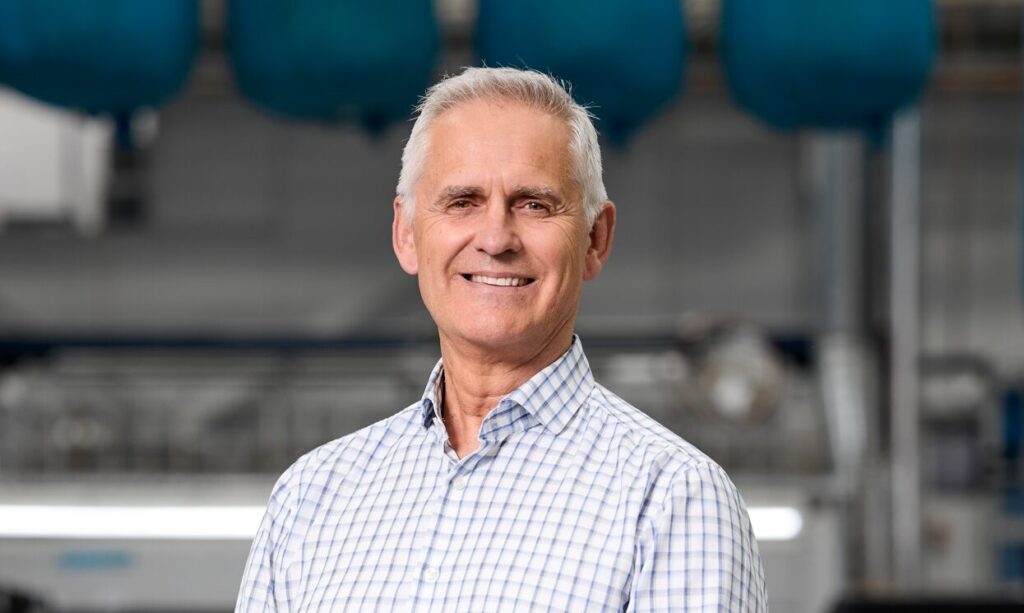
Written by:
Andrew Robson,
Chief Executive Officer