
If we are in the business of linen hire, then why is time rarely part of the commercial equation?
In almost every other business where an asset owner hires an asset to another person or business, pricing is linked to the period that asset is unavailable to someone else. Car rental, plant and equipment hire, and hotel rooms all operate on the same basic principle: a customer pays for access over time. Whether it is a day rate, a weekly rate or another measure, there is a clear commercial signal that the longer an asset is held, the more it costs the hirer.
The problem: linen without a clock. So why should we care about time? We work in an industry where linen availability for customers is a constant pressure.
Idle linen sitting with Customer A cannot be hired to Customer B. Our typical response is to choose between purchasing more linen, reducing supply to Customer A, or failing to supply Customer B. In effect, we choose between spending more capital on linen or creating the perception of poor customer service. Unless hire rates are close to the actual cost of each linen item, purchasing more linen to solve the problem of idle stock can quickly deplete operating cash. It also avoids the underlying issue: sufficient linen may already exist, but too much of it is sitting idle at customer sites.
We also know that customer behaviour is not the same across every account. Some customers hold linen well beyond their needs, while others manage it extremely well. The challenge is that pressure on linen assets can affect all customers, regardless of how well individual sites manage their stock. We need customers to help solve this problem, but without time as a factor in the commercial relationship, the incentive is limited. A time-aware model encourages customers to order what they need, use it efficiently and return it promptly. This keeps stock moving and reduces pressure on the laundry to buy more linen than the system truly requires.
The Mechanism: RFID Makes Time Visible
If we accept that adding time to the commercial relationship can improve asset utilisation, increase revenue per item and improve customer satisfaction, the next question is: how do we measure time?
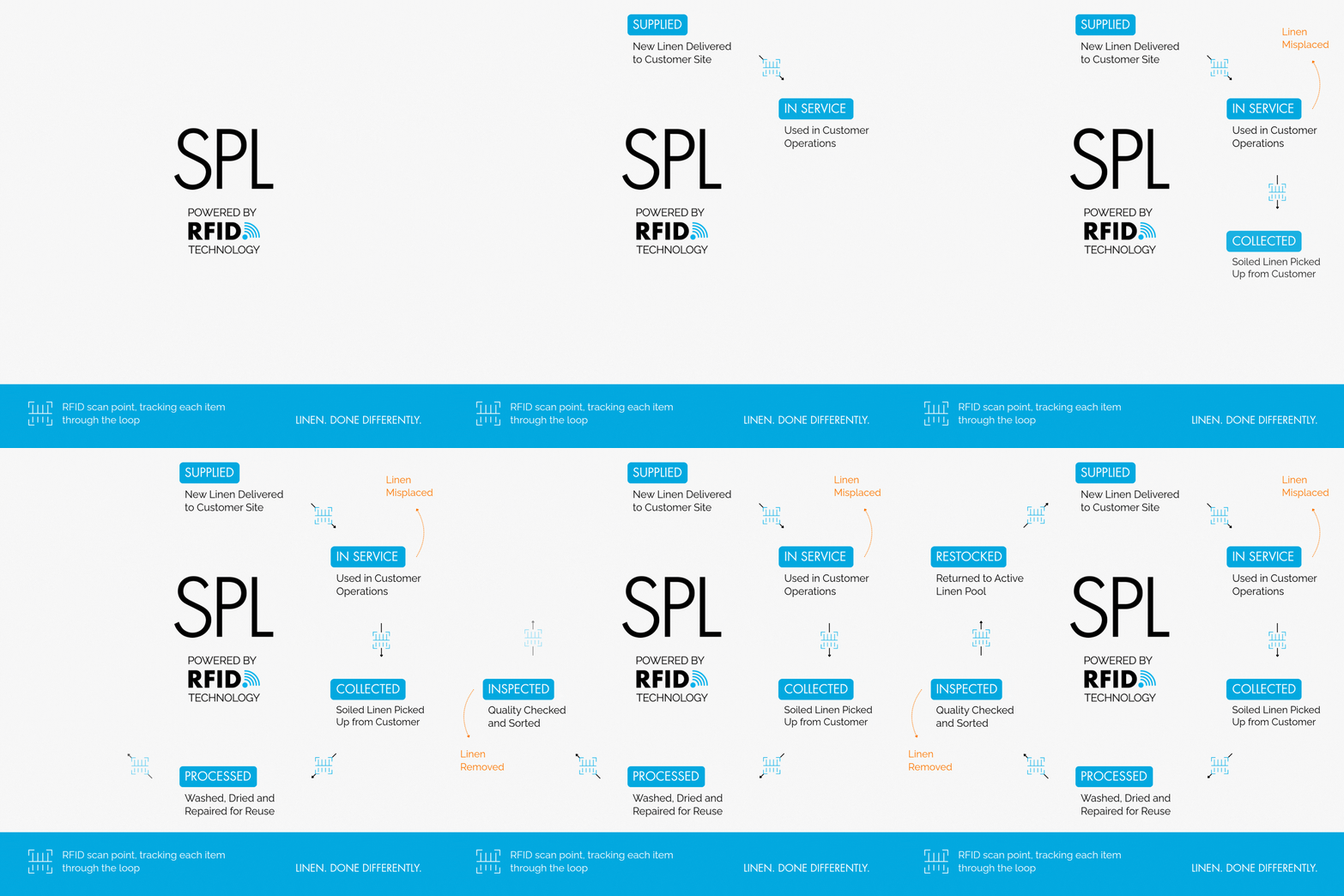
We can manually count and record linen when it is hired out, but measuring when it returns soiled is far more difficult. This is where RFID provides a practical solution. Once items carry a trackable identity and the laundry installs readily available RFID scanning tools, the time linen spends with a customer can be measured. That makes new time-dependent revenue models possible.
Our Solution: A Time-Aware Hire Model
At SPL, we are continuing to create new commercial models for linen hire where time becomes an important factor. Our partnership with Linen Hub™ is one example of this thinking: a more time-aware approach designed to improve utilisation, reduce idle linen and better match supply to customer need.
The investments we have made in RFID-tagged linen assets and the infrastructure to identify them are showing that we can improve financial performance while reducing total linen spend per customer without compromising service. This is only possible, however, if customer behaviour changes as well. By providing a commercial incentive for better linen utilisation, we have seen strong engagement from customers who are willing to manage linen more actively. Where engagement is low, it may indicate that the customer needs a different operating model, or that further support is required to build the linen management practices needed for shared success.
Why Now?
Many long-standing industry leaders will recall a time when linen was counted out and in by people. But in large-scale commercial laundries, where margins are tight and production rates continue to increase, returning to manual counting is not a practical solution.
Advances in RFID technology, tags and scanning equipment, particularly over the past two years, mean the tools needed for linen tracking are more reliable, attainable and increasingly necessary for any commercial laundry that wants to compete in the future.
Once installed, these tools connect linen movement with time and turn each movement into a measurable event. The acceleration of AI tools makes it more accessible than ever to use those events to create commercial solutions that are specific to each business and customer segment.
As an industry, the time has come to rethink an old transaction-based business model. The question is no longer whether linen can be tracked. It is whether our commercial models are ready to use that information to generate revenue more efficiently, reduce unnecessary asset pressure and improve customer satisfaction.